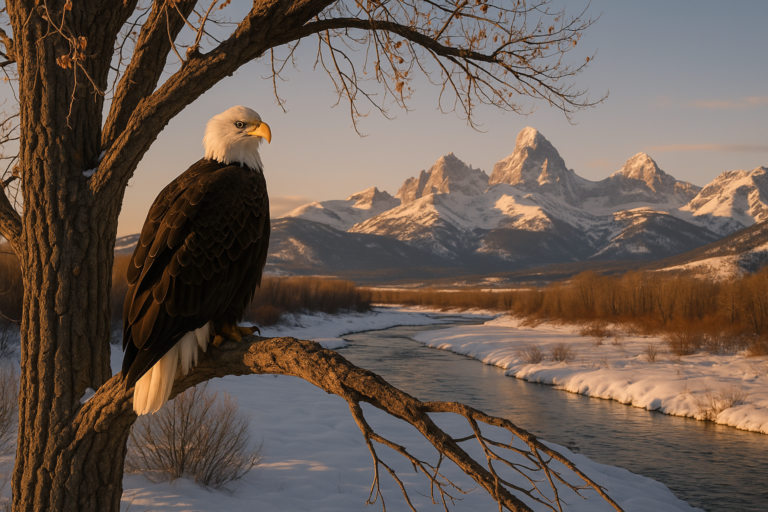
When most people think of a Teton Valley winter vacation, skiing tops the list. And rightfully so—Grand Targhee’s legendary powder is reason enough to visit. But there’s another winter experience here that’s equally magical and often overlooked: wildlife watching. February and March in Teton Valley offer some of the best opportunities in the American West to observe bald eagles, elk herds, moose, trumpeter swans, and other remarkable creatures in their natural winter habitat.
If you’re staying in Driggs for a ski vacation and looking for a memorable rest-day activity, or if you’re simply a nature enthusiast planning a winter getaway, here’s your complete guide to winter wildlife watching near The Barn and throughout Teton Valley.
Why Winter is Prime Wildlife Watching Season
Winter might seem like an odd time for wildlife viewing—don’t animals hibernate or migrate south? Actually, winter concentrates wildlife in specific areas where food and shelter are available, making them easier to spot than during the abundant summer months when they’re dispersed across vast territories.
Migration Patterns Bring Wildlife to Teton Valley
Large mammals like elk and mule deer migrate down from high-elevation summer ranges to the Teton Valley floor, where snow depths are manageable and food is accessible. Predators follow the herds. Raptors gather where rivers remain unfrozen, offering fishing opportunities when other water bodies are locked in ice. The result is remarkable wildlife density in relatively small, predictable locations.
Easier Viewing Conditions
Summer’s thick vegetation is gone, giving you clear sightlines across meadows and hillsides. Snow provides a contrasting backdrop that makes spotting animals easier—a dark elk or coyote against white snow is far more visible than the same animal in summer grass. Wildlife also tends to be active during daylight hours in winter, rather than moving primarily at dawn and dusk as they do in summer’s heat.
Bald Eagles: The Stars of Winter Wildlife Watching
If you see only one species during your winter visit, make it bald eagles. Teton Valley hosts one of the densest winter eagle populations in the Lower 48, with dozens—sometimes over a hundred—gathering along the Teton River and South Leigh Creek.
Where to See Eagles
Teton River Corridor: The easiest viewing is right from Highway 33 as it parallels the Teton River south of Driggs. Pull into the many turnouts along this stretch and scan the cottonwood trees lining the river. Eagles perch prominently in the largest trees, often multiple birds in a single tree. Early morning and late afternoon offer the best light for photography and observation.
South Leigh Creek: Just south of Driggs, this tributary of the Teton River attracts eagles in impressive numbers. The access is easy—pull off Highway 33 and walk along the roadside (be careful of traffic). The open-water sections of the creek provide fishing opportunities for eagles even in the depths of winter.
What You’ll See
Adult bald eagles are unmistakable with their white heads and tails, dark brown bodies, and massive wingspans reaching 7-8 feet. Juvenile eagles (under 4-5 years old) are mottled brown and white, often confusing people who expect all eagles to have white heads. Watch for fishing behavior—eagles will circle above open water, then drop with talons extended to snatch fish from the surface. It’s breathtaking when it happens right in front of you.
The eagles also feed on carrion, including winter-killed deer and elk, and you’ll sometimes see multiple eagles gathered at a carcass site. While less photogenic than a majestic perched eagle, it’s fascinating wildlife behavior.
Elk: Majestic Herds in Winter Habitat
Elk are among North America’s most impressive large mammals, and winter is when they’re most visible in Teton Valley. Herds of dozens or even hundreds of elk congregate on private ranch land and wildlife management areas.
Best Elk Viewing Locations
Valley-wide ranch lands: As you drive between Driggs and Tetonia, or south toward Victor, scan open fields and hillsides. Elk herds are often visible from the road, especially in early morning and evening. Bulls (males) will have shed their antlers by late February or March, while cows and young elk remain grouped together through winter.
National Elk Refuge (Jackson): If you’re making the 45-minute drive to Jackson, the National Elk Refuge on the edge of town hosts thousands of elk throughout winter. Sleigh ride tours operate daily, and a guided Grand Teton Winter Wildlife Tour covers the elk refuge and park wildlife with a professional naturalist — ideal if wildlife is the centerpiece of your trip, not just a bonus.
Viewing Ethics
Elk are on private property much of the time in Teton Valley. View from public roads, use binoculars or a telephoto lens for closer looks, and never trespass or approach elk on foot. Winter is stressful for large mammals—they’re conserving energy and any disturbance forces them to burn precious calories. Respectful viewing means staying in your vehicle or maintaining a minimum distance of 100 yards if on foot.
Moose: Elusive Giants
Moose sightings are less predictable than elk or eagles, but when you do spot one of these massive animals, it’s unforgettable. Adult bull moose can weigh over 1,000 pounds and stand 6-7 feet tall at the shoulder.
Where to Look
Moose prefer willow-lined streams and creek drainages. The Teton River corridor, South Leigh Creek, and Bitch Creek areas all have moose activity. Unlike elk that form herds, moose are typically solitary or in small groups (a cow with calves). Look in thick willows near water—moose feed on willow bark and branches in winter.
Grand Teton National Park, 30 minutes south, offers excellent moose habitat, especially along the Moose-Wilson Road area and near the Gros Ventre River.
Safety Note
Moose are dangerous. Despite their ungainly appearance, they’re fast, aggressive when startled or threatened, and responsible for more human injuries in the Rockies than bears. If you encounter a moose on foot, give it a very wide berth—at least 50 yards. Never position yourself between a cow and her calf.
Trumpeter Swans: Elegant Winter Visitors
Trumpeter swans are North America’s largest waterfowl, with wingspans approaching 8 feet and weights up to 30 pounds. These pure white birds are breathtaking against a winter landscape, and Teton Valley hosts wintering populations.
Where to Find Swans
Look for swans on open-water sections of the Teton River and other unfrozen streams. They’re often seen near Tetonia and along Highway 33. Flat Creek in Jackson also hosts a notable winter swan population and is easily viewed from the National Elk Refuge Road.
Swans feed on aquatic vegetation and need open water, so their presence is a good indicator of springs and areas where water doesn’t freeze solid. Early morning offers the best lighting for photography as these white birds practically glow in soft sunrise light.
Other Wildlife to Watch For
Coyotes
Coyotes are common throughout Teton Valley and are often visible hunting in fields and along roadsides. Their winter coats are thick and beautiful, and watching them hunt—pouncing through snow to catch voles and mice—is entertaining and impressive.
Red Foxes
Less common than coyotes but occasionally spotted, red foxes are stunning against snow. They hunt similarly to coyotes, making those characteristic pouncing leaps into snow to catch rodents.
River Otters
River otters are active year-round and can be spotted along the Teton River and other waterways. They’re playful and fun to watch, though sightings are less common than other species on this list.
Bighorn Sheep
A small bighorn sheep population lives on the steep slopes east of Grand Targhee. Spotting them requires luck and good optics, but seeing these magnificent animals in their cliffy habitat is worth the effort. The ski area sometimes has sheep visible from the upper lifts.
Equipment and Preparation
Binoculars
Good binoculars transform wildlife watching from “I think I saw something” to genuine observation and appreciation. A mid-range pair (8×42 or 10×42) is perfect for spotting and identifying animals at distance. Many visitors forget to pack binoculars for ski trips, but if wildlife watching is on your agenda, they’re essential.
Telephoto Lens
If you’re serious about wildlife photography, bring a telephoto lens—at least 200mm, ideally 400mm or longer. Even with a long lens, you’ll be shooting at distance, respecting the wildlife and keeping yourself safe. A tripod or monopod helps stabilize long lenses.
Warm Clothing
Wildlife watching often involves sitting or standing still for extended periods, which is much colder than active skiing or hiking. Bring insulated boots, warm layers, gloves, and hand warmers. February mornings can be bitterly cold, but that’s often when wildlife activity is best.
Spotting Scope (Optional)
Serious birders and wildlife enthusiasts use spotting scopes for high-magnification viewing at long distances. They’re heavier and more expensive than binoculars, but if you have access to one, it dramatically enhances your ability to identify species and observe behavior.
Guided Wildlife Tours
If you want expert guidance and higher chances of seeing specific species, consider a guided wildlife tour. Several Jackson-based companies offer winter wildlife tours that cover Grand Teton National Park and the National Elk Refuge. Guides know current animal locations, provide spotting scopes and binoculars, and offer education about ecology and animal behavior.
These tours typically run 4-6 hours and can be excellent family activities, especially with younger kids who might not have the patience for independent wildlife searching. Prices run $100-200 per person depending on group size and tour length.
Combining Wildlife Watching with Your Ski Vacation
One of the beauties of a Teton Valley winter vacation is how easily you can mix skiing with other activities. Here are some practical ways to incorporate wildlife watching:
Rest Day Adventures
After several hard days skiing at Grand Targhee, take a rest day and cruise the Teton River corridor looking for eagles and other wildlife. It’s low-intensity, fascinating, and gives your ski legs a break while still getting you out into the landscape.
Early Morning Excursions
Wildlife is most active early morning. Before heading to the slopes, spend an hour driving slowly along Highway 33 south of Driggs. You’ll see eagles, possibly elk herds, and get that early-day nature fix before your ski day even begins.
Afternoon Sessions
If you ski mornings only (or half-day tickets), use afternoon hours for wildlife watching when light is beautiful for photography. The golden hour before sunset illuminates animals gorgeously and offers memorable viewing opportunities.
En Route to Grand Teton or Yellowstone
If your vacation includes visits to the national parks (Grand Teton is 30 minutes away, Yellowstone’s west entrance is 90 minutes), build in extra time for wildlife watching along the route. Grand Teton in winter is spectacular for wildlife, especially along the Antelope Flats and Moose-Wilson Road areas. A small-group Yellowstone wildlife jeep safari is worth bookmarking for any day you want a fully guided experience.
🗺️ Book These Experiences Near The Barn
- Grand Teton Winter Wildlife Tour — Half-day with a naturalist. Elk refuge, moose habitat, bald eagles — hit all the highlights without driving yourself.
- Yellowstone Small-Group Wildlife Safari by Jeep — When you want to go bigger — wolves, bison, bears, and geothermal wonders in America’s first national park.
Photography Tips for Winter Wildlife
- Shoot in RAW format for maximum editing flexibility, especially in the high-contrast conditions of snow
- Overexpose slightly to prevent snow from appearing gray; your camera’s meter will often underexpose snow scenes
- Use fast shutter speeds (1/500 or faster) to freeze action—eagles in flight, elk running, etc.
- Focus on the eyes—if the animal’s eyes are sharp, the photo works even if other elements are soft
- Include environmental context by not zooming in too tight; showing animals in the Teton landscape tells a more compelling story
- Be patient—wildlife photography is often waiting for the right moment, the right behavior, the right light
Responsible Wildlife Viewing
Winter is the most stressful time of year for wildlife. Food is scarce, energy budgets are tight, and any disturbance forces animals to burn calories they can’t easily replace. Responsible viewing means:
- Stay in your vehicle when possible—it acts as a blind and doesn’t alarm wildlife as much as a person on foot
- Maintain safe distances—100+ yards for elk and moose, even farther for safety and animal comfort
- Never feed wildlife or attempt to attract them closer
- Keep dogs leashed and controlled—a dog chasing elk or deer in winter can cause fatal stress
- Respect private property—much of Teton Valley is ranchland, and trespassing is both illegal and disrespectful
- Share sightings responsibly—posting exact locations of sensitive wildlife on social media can lead to overcrowding and harassment
The goal is observation that doesn’t alter animal behavior. If an animal changes what it’s doing because of your presence, you’re too close.
Where to Stay for Wildlife Watching in Driggs
If wildlife watching is a priority alongside skiing, staying in Driggs puts you in the heart of prime habitat. The Barn’s location in downtown Driggs means you’re minutes from the Teton River corridor, the main eagle viewing areas, and easy access to valley-wide wildlife locations.
With 8 bedrooms sleeping up to 14 guests, The Barn is ideal for multigenerational trips where some family members want to ski while others prefer wildlife photography and nature excursions. The pet-friendly policy (2 dogs, $75 fee) means you can bring your well-behaved dogs along—though keep them leashed and controlled around wildlife areas.
Having a home base with a full kitchen also means you can keep binoculars, camera gear, and warm clothing organized and ready for spontaneous wildlife outings. Spot eagles from the car on your way back from skiing? You can easily swing by for a closer look without disrupting complicated hotel logistics.
Book your Driggs wildlife and ski adventure at The Barn.
Educational Resources
Want to learn more before your visit? The Teton Regional Land Trust offers occasional educational programs about local wildlife and conservation efforts. Grand Teton National Park’s visitor centers (Craig Thomas Discovery and Visitor Center near Moose) have excellent wildlife exhibits and ranger programs, some of which continue through winter months.
Field guides specific to the region—like “Birds of the Rocky Mountains” or “Mammals of the Northern Rockies”—enhance your knowledge and help with species identification. Many are available as smartphone apps now, making field identification easier than ever.
Experience the Wonder of Winter Wildlife
There’s something deeply moving about watching a bald eagle soar against the backdrop of the Teton Range, or observing a herd of elk moving across a snowy meadow in the soft light of a February morning. These moments connect you to the natural world in ways that are increasingly rare in our modern lives.
Your Teton Valley winter vacation doesn’t have to be just about skiing—though the skiing is world-class. By incorporating wildlife watching into your plans, you add dimension and wonder to your trip. Kids especially benefit from these experiences, developing appreciation for nature and wildlife that can last a lifetime.
So pack the binoculars alongside your ski gear, leave a little extra time in your schedule for exploring the river corridors, and prepare to be amazed by the wild residents of Teton Valley. They’re waiting to show you their world.