If you are searching for the best wildlife safaris near Driggs, you are in the right part of Idaho. Driggs puts you close to both Grand Teton and Yellowstone, which means you can build a trip around bison, elk, moose, wolves, and the kind of mountain scenery that makes a wildlife tour feel like a real vacation instead of a checkbox.
Why Driggs is such a good wildlife base
Most wildlife travelers focus on the park they want to visit and then treat lodging as an afterthought. That is backwards here. If you stay in Driggs, Idaho, you get a quieter base, more room for a family or group, and a practical launching point for both the Grand Teton corridor and Yellowstone’s south side. The drives are manageable, the restaurants are easy, and you do not need to pay Jackson Hole pricing just to wake up near the action.
That matters because wildlife trips work best when the logistics are simple. Animals move early and late. Guides often start before most vacationers are fully awake. When your home base is calm, spacious, and close enough to the park gates, you are much more likely to say yes to the 5:30 a.m. start that makes the whole day worthwhile.
Driggs also pairs well with a slower pace. You can leave for a tour, spend the day in the field, and come back to dinner in town instead of trying to stretch the day around a packed resort corridor. That rhythm is ideal for families, photographers, and groups that want one memorable anchor activity without having to sacrifice comfort.
What you are likely to see in spring and early summer
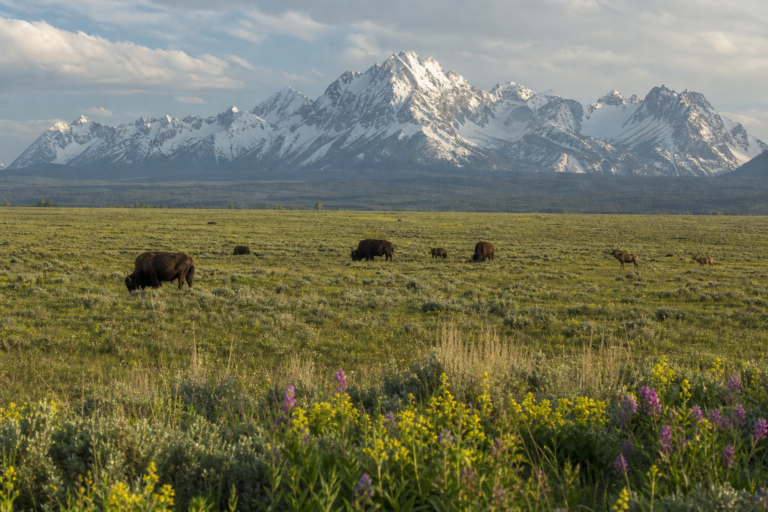
Spring into early summer is one of the best windows for wildlife in the Tetons. Elk, moose, and bison are active, and the season often brings calves and broader movement patterns that make guided viewing feel especially alive. Snow is still visible on the peaks, wildflowers begin to show up, and the scenery stays dramatic even when the valley floor is already green.
The catch is that wildlife is never guaranteed. That is why the guide matters. A good safari uses local knowledge, timing, and patience to stack the odds in your favor. It is less about promising a perfect sighting and more about knowing where the animals are likely to be and how to move through the landscape without wasting daylight.
That also means the best wildlife tour is not necessarily the one with the biggest marketing language. It is the one that fits your group size, your comfort level, and your travel schedule. If you want to keep things flexible, choose a shorter half-day experience. If you want to build the day around a deeper look at the region, book a full-day option and let the guide do the route planning.
How to choose the right safari
For first-time visitors
If this is your first Teton Valley wildlife trip, start with a guided experience that keeps the route simple and the expectations realistic. A first-time safari should give you a strong scenic overview, a few high-probability wildlife stops, and enough time to understand the landscape without turning the day into a bus marathon.
That is why so many travelers like the Grand Teton side first. The drive from Driggs is short enough to feel easy, but you are still close enough to see a meaningful slice of the ecosystem. If the weather is good, it is also a natural fit for an early dinner back in town at places like Citizen 33 Brewery, Teton Thai, or Forage Bistro after the tour ends.
For families and mixed-age groups
Families usually want two things at once: enough excitement to feel like a real adventure, and enough comfort that nobody starts melting down in the middle of the day. A half-day safari or a smaller-group wildlife tour often hits that balance. You get the animals and the scenery without pushing everyone through a 12-hour itinerary.
That is where staying in a larger home base like The Barn helps. When the whole group is under one roof, the morning departure is simpler, the snacks are easier, and the post-tour decompressing is actually relaxing. It sounds minor until you have tried to coordinate three hotel rooms and two car seats before sunrise.
For photographers and repeat visitors
If you have done the standard overlook stops before, look for a guide who is comfortable adjusting for light and animal movement. Early-morning and sunset windows matter. So does the willingness to wait for the right scene instead of rushing from one checkbox to the next. That is where premium small-group tours can be worth the extra money.
Photographers should also think about seasonal contrast. Late spring can give you snowy peaks, green valleys, and active wildlife in one frame. That combination is part of what makes the area so easy to market and so hard to forget. It is not just a wildlife trip. It is a landscape trip that happens to include wildlife.
What to pack and plan for
Even in the warmer months, mornings can be cool and wind can pick up quickly. Pack layers, a hat, sunscreen, binoculars, and a camera with a decent zoom if you have one. Comfortable shoes matter more than people think, especially if your day includes short walks, roadside stops, or time standing still while everyone watches a distant herd move across a meadow.
It also helps to treat wildlife time as an early-day priority. The best viewing is usually not when everybody is perfectly rested and casually wandering around at 11 a.m. It is when you are willing to start early, keep your expectations flexible, and let the guide read the day. That approach usually leads to better sightings and fewer complaints.
For meals, keep the rest of the day simple. A post-tour dinner in Driggs works better than a complicated reservation chain. You are coming back from a full day outside. The win is not another long drive. The win is being able to settle in, eat, and swap stories while the light fades over the Tetons.
Book a Wildlife Safari
If you want to hand the route planning to someone local, these tours are the cleanest fit for a Driggs-based trip.
- 🦬 Grand Teton Sunset Wildlife Tour — Strong for travelers who want a classic Grand Teton wildlife day with a scenic finish.
- 🦌 Best of Jackson Hole Wildlife Safari (VIP) — A premium choice when your group wants a more elevated small-group experience.
- 🌋 Yellowstone Old Faithful & Wildlife Day Tour — Best if you want to combine iconic Yellowstone scenery with wildlife viewing in one longer outing.
Those are the kinds of outings that work especially well when you can come home to The Barn instead of splitting your group across multiple hotel rooms. If you want more trip ideas before you book, our travel guide is a good place to start.
The bottom line
For wildlife-focused travelers, Driggs is one of the smartest bases in the Tetons. You get easier logistics, more room to spread out, and direct access to the places where the viewing is strongest. If your ideal mountain trip includes animals, views, and a home base that does not waste your time, Driggs makes the case pretty quickly.