The Greater Yellowstone Ecosystem is the largest intact temperate ecosystem in the Northern Hemisphere, and Driggs, Idaho sits right on its doorstep. From grizzly bears and wolves to bald eagles and moose, the wildlife around Teton Valley is extraordinary, and you don’t need to be a seasoned naturalist to see it. Whether you prefer a guided safari with expert spotters, a self-drive wildlife loop, or a peaceful morning watching elk from a trail near town, this guide covers the best ways to experience wildlife near Driggs throughout the year.
What You Can See (and When)
The Teton region supports an incredible diversity of large mammals, raptors, and waterfowl. What you’ll see depends heavily on the season:
Spring (April through June)
Spring is baby season, and it’s spectacular. Bison calves appear in late April (look for their distinctive reddish-orange coats in the Lamar and Hayden valleys). Moose calves show up in May, often visible along the Teton River and in willow-lined drainages near Driggs. Bear cubs emerge from dens in April and May, staying close to their mothers as they forage in lower-elevation meadows.
Bird migration peaks in May. Trumpeter swans, great blue herons, and sandhill cranes return to the valley’s wetlands. Raptors, including bald eagles and osprey, are nesting. The combination of snowmelt, green-up, and returning wildlife makes spring one of the most rewarding seasons for wildlife viewing.
Summer (July through September)
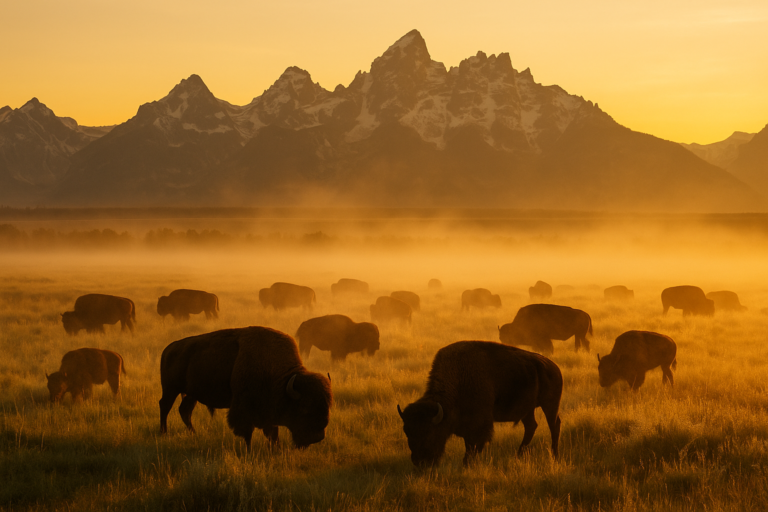
Summer brings the most accessible wildlife watching. Animals are active at dawn and dusk, and the long daylight hours give you plenty of time. Grand Teton National Park is the prime summer destination: moose frequent the willow flats near Jackson Lake Lodge, bison herds graze in the Antelope Flats area, and black bears forage along the Moose-Wilson Road.
In Yellowstone, the Lamar Valley and Hayden Valley are world-class for summer wildlife viewing. Wolf packs hunt at dawn, grizzlies fish in streams, and bison create traffic jams that have become a rite of passage for park visitors.
Fall (September through November)
Fall means the elk rut, one of nature’s most dramatic performances. Bull elk bugle across the valley at dawn, a sound that carries for miles and raises the hair on the back of your neck. The National Elk Refuge near Jackson fills with thousands of elk as they move to winter range. Moose are also in rut and highly visible (though maintain a safe distance, as bull moose can be aggressive in fall).
Grizzly bears are in hyperphagia, eating up to 20,000 calories per day to prepare for hibernation. They’re active and visible, especially along berry patches and streams. Fall color in the aspens and cottonwoods adds a golden backdrop to every wildlife sighting.
Winter (December through March)
Winter concentrates wildlife in the valleys. Elk herds gather on winter range near the National Elk Refuge. Bald eagles line the banks of the Snake River and South Fork, hunting fish in the open water. Trumpeter swans winter on ice-free sections of the Teton and Henry’s Fork rivers. Moose browse on willows in town and along Ski Hill Road near Grand Targhee.
Yellowstone’s interior is accessible only by snowcoach or guided snowmobile, but the Lamar Valley (open year-round via the North Entrance) offers world-class winter wolf watching. If you’re willing to bundle up and get out early, winter wildlife viewing rivals any season.
Best Self-Drive Wildlife Loops
You don’t need a guided tour to see amazing wildlife, though guides dramatically improve your odds. Here are the best self-drive routes from Driggs:
Teton Valley Loop (30 minutes)
Drive north on Highway 33 toward Tetonia, then loop back via the Bates Road. Watch for moose in the willow stands along the Teton River, red-tailed hawks perched on fence posts, and sandhill cranes in agricultural fields during spring and summer. This is an easy evening drive you can do without even leaving the valley.
Grand Teton National Park: Moose-Wilson Road and Antelope Flats (1-2 hours)
Cross Teton Pass into Jackson (45 minutes from Driggs) and enter Grand Teton from the south. The Moose-Wilson Road is a narrow, unpaved stretch famous for black bear and moose sightings. Antelope Flats, with its iconic Mormon Row barns and sagebrush meadows, is prime bison and pronghorn habitat. Stop at the Schwabacher Landing pullout at dawn for moose along the Snake River with the Teton Range as a backdrop. Photographers consider this one of the most scenic wildlife viewing spots in North America.
Yellowstone’s Lamar Valley (3-4 hours)
The “Serengeti of North America.” From Driggs, enter Yellowstone via the West Entrance (1.5 hours) and drive to the Lamar Valley in the park’s northeast corner. This is the best place in the Lower 48 to see wolves, grizzly bears, bison herds, and pronghorn. Bring a spotting scope and plan to arrive at dawn. The Lamar Valley is a full-day commitment but absolutely worth it.
Guided Wildlife Safari Tours
A good naturalist guide transforms a wildlife trip. They know where the animals are, they carry high-powered optics, and they provide context that turns a distant brown dot into a grizzly sow with cubs or a wolf pack on the hunt. These guided tours depart from Jackson Hole, about 45 minutes from Driggs:
- 🦌 Grand Teton Sunset Wildlife Tour — A full-day guided tour through Grand Teton with expert naturalists, timing the drive for peak wildlife activity at dusk
- 🐻 Best of Jackson Hole Wildlife Safari (VIP) — A premium small-group experience with professional spotting scopes, binoculars provided, and a naturalist guide who knows every den and grazing spot
- 🏔️ Grand Teton Half-Day Tour — Perfect if you want a shorter introduction, covering the highlights of Grand Teton with wildlife spotting along the way
- 🦬 Yellowstone Old Faithful & Wildlife Day Tour — Combines Yellowstone’s thermal features with dedicated wildlife viewing in the Hayden and Lamar valleys
Wildlife Viewing Tips for Beginners
You don’t need expensive gear or years of experience to see incredible wildlife. Here’s what actually matters:
- Get out early. Wildlife is most active in the first two hours after dawn and the last two hours before dark. If you’re sleeping in until 9 AM, you’re missing the best window.
- Bring binoculars. Even a basic 8×42 pair transforms your experience. That dark shape in the meadow becomes a grizzly with cubs. That speck on the ridge becomes a bighorn sheep.
- Drive slowly and scan. Many of the best sightings happen from the road. Drive 25 mph or less through wildlife corridors, and scan open meadows and treelines.
- Watch for “wildlife jams.” A line of parked cars along a Yellowstone or Grand Teton road almost always means an animal sighting. Pull over safely and look where everyone is pointing.
- Respect distances. National park regulations require 100 yards from bears and wolves, 25 yards from all other wildlife. These animals are wild, fast, and unpredictable. Use your binoculars and zoom lens, not your feet.
- Carry bear spray. If you’re hiking anywhere in the Greater Yellowstone Ecosystem, bear spray is essential. You can rent canisters at several locations in Jackson and at Yellowstone entrance stations.
Your Wildlife Base Camp in Driggs
Driggs, Idaho is uniquely positioned for wildlife enthusiasts. You’re 30 minutes from Grand Teton National Park, 1.5 hours from Yellowstone’s West Entrance, and surrounded by the kind of open valley habitat where moose, elk, and raptors are part of daily life. Some guests at The Barn have spotted moose from the property itself.
With 8 bedrooms and space for up to 14 guests, The Barn is built for groups who want a real home base between adventures. Cook breakfast before a dawn wildlife drive, spread out field guides on the dining table, and swap sighting stories over dinner. It’s pet-friendly too (up to 2 dogs, $75 fee), so even your four-legged family members can enjoy the mountain air.
Whether you’re here for spring baby season, summer safaris, fall elk bugling, or winter wolf watching, Teton Valley delivers wildlife experiences that rival the best in the world. And you don’t need to fight the Jackson Hole crowds to find them.
Book your stay at The Barn and start planning your Teton Valley wildlife adventure.