Late May and early June in Teton Valley is one of the best-kept secrets in mountain travel. The lifts at Grand Targhee are done. Yellowstone has fully reopened. Wildflowers are detonating across the valley. And the summer crowds — the families, the bachelor parties, the cyclists, the festival-goers — haven’t arrived yet. For about three weeks, Driggs runs at the pace of a small Idaho farm town instead of a vacation hub, and prices, parking, and patience all reflect that. If you can travel in this window, do.
Here’s what to do in Teton Valley before the summer crowds arrive, why it’s a smart shoulder window for travelers who hate lines, and how to plan a trip that takes full advantage of it.
Why the Pre-Summer Shoulder Is a Gift
The classic Teton Valley travel rhythm has two big tourist seasons — ski (December–March) and high summer (mid-June through August). The bookends in between are spring and fall shoulder seasons. The late-May-to-early-June window sits at the end of spring shoulder and is genuinely the easiest time of the year to be here:
- Rates drop. Most vacation rentals run mid-week and weekend rates 20-40% under peak summer pricing.
- Yellowstone is open. All major loops and entrances are typically running by late May, but visitation is still less than half of July.
- Grand Teton is fully open. Highway 191, Jenny Lake area, Inner Park Road — all accessible without the July traffic.
- Restaurants are open with no waits. By mid-June, you’ll need a reservation at the popular spots. In late May, walk in.
- Weather is unstable but generous. Plenty of 65-75°F afternoons. Pack layers and a rain shell.
Wildflowers and Wildlife Watching
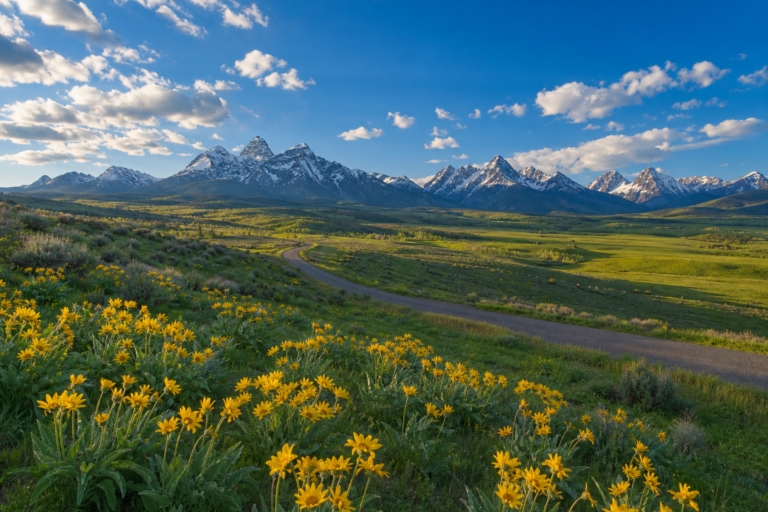
Late May into early June is the peak of arrowleaf balsamroot bloom across Teton Valley. Picture entire hillsides covered in bright yellow flowers, with snow still capping the Teton range behind them. It’s the postcard image everyone associates with the area, and it lasts roughly two weeks before lupine and paintbrush take over.
Best places to walk into the wildflowers:
- Table Mountain trailhead approaches — Lower meadows are open even when the upper trail isn’t. Easy walk, dramatic photos.
- Teton Canyon — Drive in, park, walk the lower trail. Bear awareness required (this is grizzly country in spring).
- Mahogany Ridge area roads — Mellow drive-and-walk landscapes for non-hikers.
- Antelope Flats in Grand Teton National Park — Bison herds, wildflowers, the Tetons as backdrop. Probably the most photographed roadside scene in the region right now.
Wildlife is also peaking. Moose calves are wobbling around marshlands. Elk are bunched in larger spring herds. Bears are coming out of the high country to feed in the lower meadows. Bring binoculars, drive the back roads slowly, and pull off well — never park in lanes of travel and never approach animals.
Hiking in the Shoulder Window
The thing to understand about hiking in late May is altitude. The valley floor (around 6,000 feet) is fully open and flowering. The Tetons themselves are still snowbound above roughly 8,500 feet. So you want low-and-mid-elevation hikes, not summit pushes.
- Teton Canyon (lower) — Wide, flat, well-graded. Family-friendly with stroller-capable sections. About a mile or two before you start hitting real snow.
- Darby Wind Cave Trail (lower portions) — The full trail is high alpine but the lower stretches are usually open and dry by late May.
- Phelps Lake Loop (Grand Teton NP) — Three-mile lake loop, usually clear of snow by late May. One of the prettiest moderate hikes in the area.
- String Lake Loop (Grand Teton NP) — Flat, family-friendly, lakeside. Often the first GTNP loop to fully clear.
Always check trail conditions at the Grand Teton visitor center or with the Teton Valley ranger station before you commit. Postholing through thigh-deep mid-May snow is not the trip you came for.
Fishing — But Know the Calendar
This is the tricky season for fishing. The Teton River itself is closed to angling from December 1 through June 30 for the cutthroat spawn — you cannot fish the Teton in our pre-summer window. But the surrounding water is excellent:
- Henry’s Fork (Box Canyon, Last Chance) — Open and often phenomenal. Late May can see the famous salmonfly hatch on lower stretches.
- South Fork of the Snake — Pre-runoff dry-fly windows can be excellent. Watch flows closely.
- Spring creeks (private water) — Worth booking through a local guide if you want technical dry-fly fishing.
- Stillwater (Henrys Lake, Island Park reservoirs) — Solid through May.
Local outfitter recommendations: WorldCast Anglers and TRR Outfitters both run guided trips out of the valley and know exactly which water is fishing on a given day. A guided full-day float on the Henry’s Fork or South Fork in late May is a serious bucket-list-worthy experience.
Day Trips From Driggs
- Yellowstone (1.5 hours) — Late-May is peak wildlife, low crowds. Full loop usually open. See our spring Yellowstone guide for routing.
- Grand Teton National Park (30 minutes) — Inner Park Road typically opens May 1; Antelope Flats accessible year-round.
- Jackson Hole (45 minutes) — Stroll the town square, visit the National Museum of Wildlife Art, dinner downtown.
- Upper Mesa Falls (1.5 hours) — 114-foot waterfall in Targhee National Forest, generally accessible by late May.
- Green Canyon Hot Springs (40 minutes) — Soaking pool less than an hour from Driggs. Pleasant after a hike.
Restaurants and Town Time
Driggs is small and walkable. From The Barn at 185 North 2nd Street East, almost every restaurant in town is a five-to-ten-minute walk. In the pre-summer window, you can walk in anywhere without a wait, which changes by mid-June:
- Tatanka Tavern — Wood-fired pizza, full bar, rooftop seating. The Friday-night spot.
- Forage Bistro & Lounge — Upscale plates, great wine list. Reservations recommended for groups.
- Citizen 33 Brewery — Craft beer, taproom food, casual.
- Teton Thai — Authentic Thai, surprisingly excellent in a small mountain town.
- Big Hole Bagels & Provisions — The breakfast rotation. Provisions opens earliest.
- Figgie’s Deli — Pack a lunch for trail or river day.
Book a Guided Day While Crowds Are Thin
Pre-summer is the easiest time to book popular guided experiences because the rush hasn’t started. A few worth considering:
- 🦌 Best of Jackson Hole Wildlife Safari (VIP) — Small-group safari led by professional naturalists. Peak wildlife window.
- 🏔️ Grand Teton Sunset Wildlife Tour — Hit Antelope Flats and the Inner Park Road at golden hour.
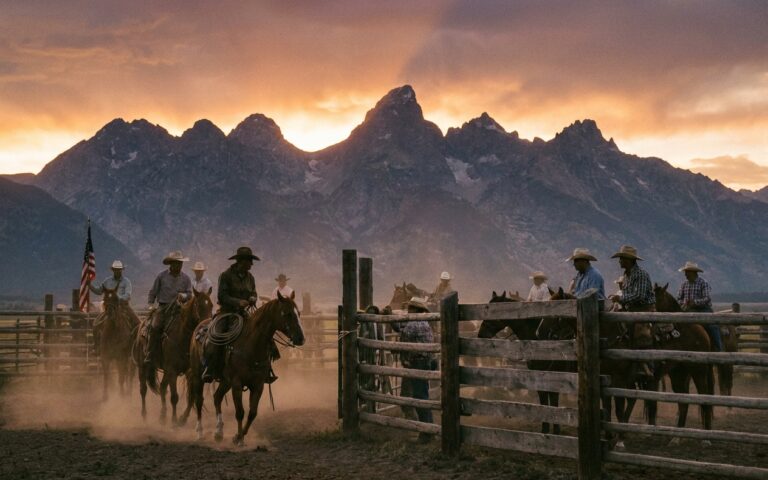
- 🐎 Horseback Riding with Grand Teton Views — A great non-strenuous way to get out into the country.
A Sample Three-Day Pre-Summer Itinerary
- Day 1 — Local Day. Lower Teton Canyon hike in the morning. Wildflower drive in the afternoon. Dinner at Tatanka Tavern.
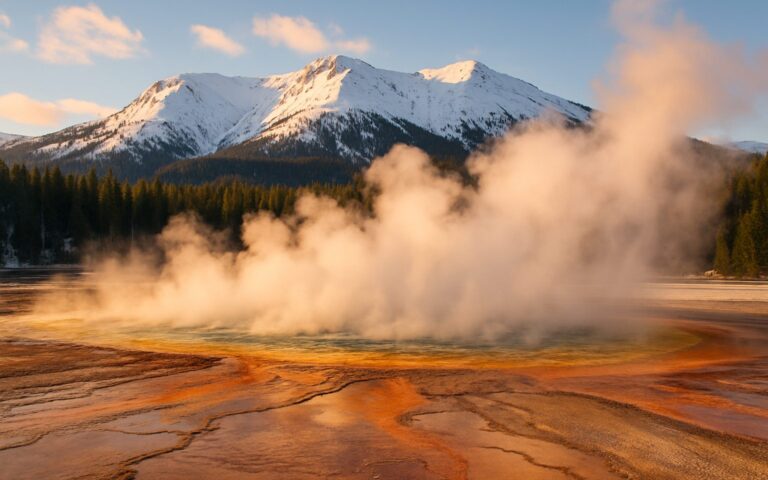
- Day 2 — Yellowstone. Out the door at 6:30 a.m. West Entrance by 8 a.m. Old Faithful and Grand Prismatic in the morning. Wildlife watching in the afternoon. Home for dinner at Forage.
- Day 3 — Grand Teton + Fishing. Morning float on the Henry’s Fork with a guide. Afternoon scenic drive through Grand Teton. Phelps Lake or String Lake loop walk. Dinner at Citizen 33.
The Barn as Your Pre-Summer Base
The Barn is an 8-bedroom, 4-bath home that sleeps 14, in downtown Driggs at 185 North 2nd Street East. In the pre-summer shoulder, it’s ideal for multi-generational families, friend groups, or any travelers who want real space, a quiet town, and easy access to all three of the area’s biggest draws — Yellowstone, Grand Teton, and Grand Targhee — at off-peak prices.
If you’ve been waiting for a quieter version of this trip, late May and early June is the one. Check availability at The Barn and pick a week before the crowds catch on.