Most people think of Yellowstone as a summer destination. They picture RV convoys, packed parking lots at Old Faithful, and the battle for a campsite in July. What they’re missing is one of the most magical versions of the park: Yellowstone in winter. And for guests staying near Driggs, Idaho, it’s only 90 minutes to the West Entrance—making a Yellowstone winter snowcoach trip one of the most spectacular day trips possible from Teton Valley. If you’re planning a winter visit and want an experience that stays with you for years, this is it.
Why Winter is Yellowstone’s Best-Kept Secret
Yellowstone receives roughly 4 million visitors annually—but only about 150,000 come in winter. That ratio tells you everything. The same geysers, the same bison herds, the same geothermal wonders: experienced without the crowds, in conditions that are frankly more dramatic. Steam rises from hot springs in freezing air. Bison materialize from snowdrifts. Wolves are actually spotted in winter far more reliably than in summer, when the vegetation conceals them.
From late November through mid-March, most of Yellowstone’s interior roads are closed to wheeled vehicles. That’s precisely what makes the winter experience so special—and so quiet. Access to the interior is by snowcoach, snowmobile, or cross-country skis only. The result is a park that feels genuinely wild.
Getting There from Driggs: The 90-Minute Drive
The Barn is located in Driggs, Idaho, roughly 90 miles from Yellowstone’s West Entrance near West Yellowstone, Montana. The drive typically takes 90 minutes under normal winter conditions via Highway 20 north through Ashton and Island Park. Check road conditions before you go—winter weather can occasionally slow the route.
If you’d rather leave the driving to someone else, guided tours depart from Jackson Hole (45 minutes from Driggs) and can be booked in advance. Departing from Jackson, most full-day tours cover either the Upper Loop (Mammoth, Norris Geyser Basin) or Lower Loop (Old Faithful, West Thumb) in 10-12 hours round-trip.
What Is a Snowcoach?
A snowcoach is a specialized over-snow vehicle—essentially a heated van mounted on skis or tracks—designed to travel on Yellowstone’s snow-packed interior roads. Modern snowcoaches are warm, comfortable, and equipped with large windows designed for wildlife viewing and photography. You’re not roughing it; you’re gliding through a winter wonderland in a heated cabin with a knowledgeable guide narrating everything you see.
Tours typically enter from the West Entrance and travel toward Old Faithful, Norris Geyser Basin, or both, depending on the itinerary. Along the way, the guide stops wherever wildlife or particularly dramatic thermal features appear.
What to Expect on a Yellowstone Winter Tour
Old Faithful in Winter
Old Faithful erupts approximately every 90 minutes year-round. In winter, watching it erupt against a backdrop of snow-covered lodgepole pines and a blue-gray sky is an entirely different experience than the summer version. The visitor center and Old Faithful Inn are partially open in winter, offering warmth and a window-side view of the geyser basin.
Norris Geyser Basin
The hottest and most dynamic geyser basin in Yellowstone, Norris features Steamboat Geyser—the world’s tallest active geyser. In winter, the contrast between the scalding thermal features and the surrounding snow creates surreal, fog-draped landscapes that photographers dream about.
Wildlife: Why Winter is Actually Better
Bison don’t hibernate, and in winter they congregate around geothermal areas where the ground stays warm enough to graze. It’s common to encounter bison herds standing directly on the road or grazing beside thermal features—close enough to photograph without a telephoto lens. Wolves are also more reliably spotted in winter, particularly in the Lamar Valley on the Northeast side.
Beyond bison and wolves, winter brings elk, coyotes, bald eagles, and the occasional moose to easily accessible viewing areas. A knowledgeable guide dramatically increases your chances of finding the rarer species.
Practical Tips for a Winter Yellowstone Day Trip from Driggs
What to Wear
Dress in layers for Yellowstone in winter—temperatures inside the park can be dramatically colder than in Driggs. Expect interior temperatures to range from -20°F to 20°F on most winter days. Essentials:
- Moisture-wicking base layer (wool or synthetic)
- Insulating mid-layer (down or fleece)
- Waterproof outer shell
- Insulated, waterproof boots rated to at least -20°F
- Wool socks, hand warmers, face protection
- Sunglasses or goggles (snow glare is intense)
What to Bring
- Camera with extra batteries (cold drains batteries fast)
- Binoculars for wildlife spotting
- Snacks and water (some tours provide lunch, check ahead)
- Cash for tips—your guide earns it
- National Parks pass (saves $35 per vehicle on the entrance fee)
Best Time to Go
Mid-January through February tends to offer the most pristine winter conditions—deep snow, reliable wildlife sightings, and the most dramatic thermal steam displays. March can be slightly warmer, which is nice for comfort, but the winter atmosphere starts to soften. Book early; winter tours fill up weeks in advance.
Book a Yellowstone Winter Tour
These guided tours from Jackson Hole pair perfectly with a Driggs stay—just a 45-minute drive from The Barn:
- 🐺 Yellowstone Old Faithful & Wildlife Day Tour — Small-group safari covering iconic stops with expert wildlife guide
- 🦌 Yellowstone Full-Day Lower Loop — Old Faithful, West Thumb, and the park’s most iconic features in one day
- 🏔️ 2-Day Yellowstone (Both Loops) — For the ultimate winter experience covering all major areas
Pairing Yellowstone with a Grand Targhee Ski Trip
The beauty of basing yourself in Driggs is that no single activity has to be your whole trip. A multi-day stay at The Barn lets you mix and match:
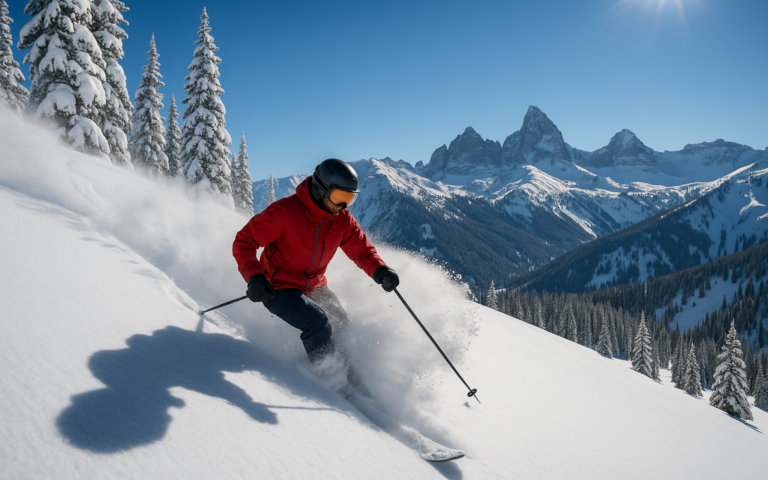
- Day 1: Arrive, ski Grand Targhee (12 miles from The Barn)
- Day 2: Full-day Yellowstone snowcoach tour
- Day 3: Morning ski, afternoon snowshoe, downtown Driggs evening
- Day 4: Depart
That’s a winter vacation that covers world-class skiing, America’s most iconic national park, and a mountain town with fantastic food—all without moving lodging once. The Barn accommodates groups up to 14, is pet-friendly (2 dogs welcome, $75 fee), and is five minutes from both downtown Driggs and the Grand Targhee shuttle stop. Book your winter stay at The Barn.
One More Thing: Grand Teton in Winter
On your drive to or from Yellowstone, you’ll pass through Grand Teton National Park. In winter, the park road (Teton Park Road) is closed to vehicles but open to snowshoers and cross-country skiers. The views of the Teton Range from the valley floor in winter are among the most dramatic in the national park system—worth a stop, even just to photograph from the Antelope Flats pullouts on Highway 26/191.
Check the Barn travel guide for more on planning your Teton Valley and national park adventures by season.